



Where is Malaysian Borneo?
Malaysian Borneo comprises the two state of Sabah and Sarawak located at the north of the island of the island of Borneo.
Sabah, Malaysia’s second largest state, is located in the northeast. Spend a few days in the modern state capital of Kota Kinabalu, and you’ll be calling it KK like the locals and old hands. KK offers big city comfort and convenience makes a perfect gateway to the rich hinterlands of Sabah.
Sarawak to the west of Sabah is the largest state in Malaysia and home to the delightful colonial riverside capital city of Kuching. An ideal jumping off point to Sarawak’s hinterlands, Kuching is a cultural haven with palaces, temples and traditional markets.
Today’s Borneo retains much of its pristine untamed character while also being a modern state with easy accessibility, excellent travel facilities and all the modern conveniences.
Do I Need a Visa to Enter Borneo?
To enter Malaysia you must possess a valid passport or travel document valid for at least six months and to fulfill visa requirements (if applicable).
Tourists from the United States, Canada, Australia, New Zealand and most of the European Union do not need a visa to enter on Malaysia and will be issued a social visit pass for 30-90 days on a arrival.
Though part of Malaysia, Malaysian Borneo has its own entry requirements.
On arrival you will be given a new social pass even if you already received one in peninsula Malaysia. If you travel to mainland Malaysia, your stamp received in Malaysian Borneo remains valid.
All visitor must complete an arrival/departure card. These are generally distributed on the aircraft.
How Do I Get to Borneo?
Kota Kinabalu has direct flight connections with the major cities in the region including Kuala Lumpur, Singapore, Hong Kong, Brunei, Manila, Seoul, Taipei, Macau, Shenzen and Beijing.
International flights connect Kuching with Indonesia (Bali, Jakarta), Brunei, Macau, Singapore and Xiamen (China).
How Do I Get Around Borneo
Sabah has an extensive network of paved roads reaching to the major tourist spots including one all the way to the east coast. These roads are plied by a convenient range of bus, mini van and taxi services. Domestic flights are also available to key destinations.
Much adventure travel in the state is carried out along logging trails and special pathways through forests, jungles and up hills and mountains. Sabah also features boat travel to islands such as Pulau Labuan along with some river routes.
Sarawak features a much more extensive river network offering scenic boat travel to many of the state’s prime tourist spots.
What do I need to know about the weather in Borneo?
Borneo is subject to a hot, wet and humid climate as befits its location on the equator. Daytime temperatures range from 22-35 degrees at ground level and it can get much cooler in the highlands. The mercury has been known to drop to zero on Mount Kinabalu.
The rainy season in Borneo runs from November to April but rain is possible at any time of the year.
The best time for a visit is during the dry season which starts in April If you wish to view turtles laying their eggs, you need to come between June and September.
How Do I Ensure a Safe Trip?
Despite its wild and untamed reputation, travel throughout Borneo is very safe providing some basic precautions are taken.
Whatever type of tour you choose, you really need to take only established tours led by a knowledgeable local guide. Other than the safety factor, only someone with extensive knowledge of the local area has the savvy to unlock the magic of Borneo for you.
What Items Should I Prepare for Adventure Tours?
Trekking in Borneo can be rugged and demanding so you need to outfit yourself with stout walking shoes and leech socks. A raincoat, swimming costume, insect repellent, sun tan lotion, dry foods, water bottle and torch are also recommended.
For rafting trips, you need to take along a set of spare clothes and towel. Make sure your camera is well waterproofed and your glasses are well protected.
Climbing up Mount Kinabalu you need to be careful of altitude sickness (AMS), Symptoms include headache, dizziness and shortness of breath. The trick is to adapt to the thinning air by taking things easy.
What Kind of Accommodation is Available?
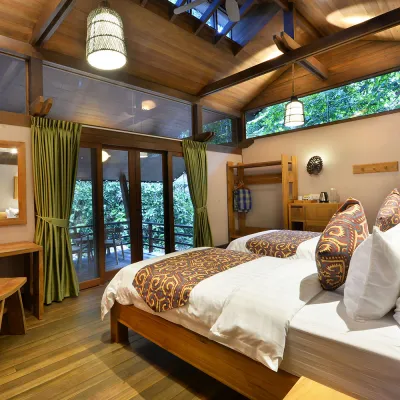
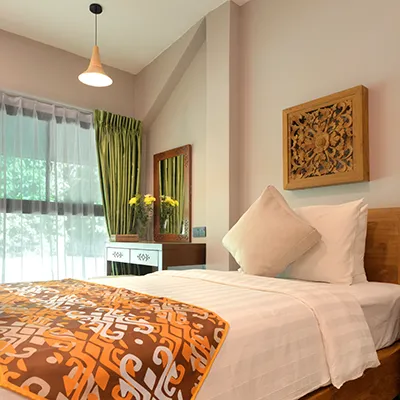
Borneo’s cities offer the most modern hotels including major chains. Outside the capitals, accommodation is likely to be more modest with comfortable inns and guest houses. On treks you will likely stay in village home where a warm welcome will make up for modest facilities. Other tours include stays in native longhouses.