



The message arrives like so many do, full of quiet worry.
“We’ve been dreaming of this trip for years,” Sarah wrote to us. “But we can only travel in November. Is that… okay? Will it be ruined by the rain?”
We get some version of this question every week. And we understand it completely. You’ve saved. You’ve planned. You’ve told everyone about your Borneo adventure. The last thing you want is to arrive and find yourself staring at a wall of rain, wondering what you’ve done.
So here is the honest answer. Not the marketing version. The truth, with all its complexity, its surprises, and yes, its genuine magic.
First: What Does ‘Wet Season’ Actually Mean in Borneo?
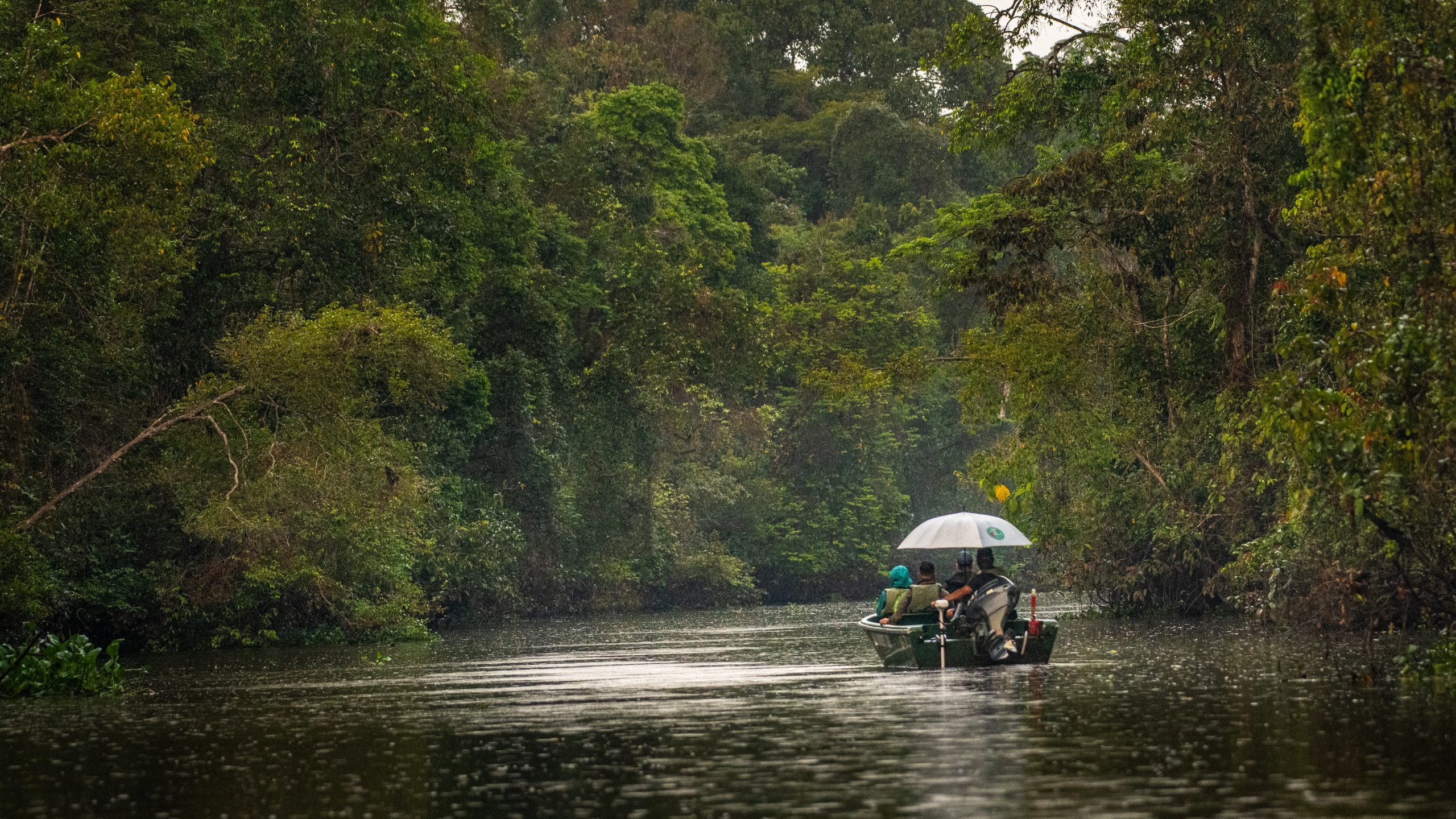
Borneo sits near the equator. It doesn’t have seasons the way Europe or North America does. What it has is variation in rainfall, and even that is relative.
The wetter months in Sabah, Malaysian Borneo generally run from November through February, with October and March as shoulders. But here’s what that actually means in practice: you’re unlikely to see rain all day, every day. What you’re more likely to experience are afternoon downpours, which are intense, dramatic, and often over within an hour, followed by that particular freshness that only tropical rain can produce.
Mornings are frequently clear. Wildlife doesn’t care about your weather app. And the forest? The forest is extraordinary, regardless of rain or shine.
The Honest Cons (Because You Deserve the Truth)
Wildlife Sightings Can Be Less Frequent
During peak fruiting season (June through October), orang utans and other wildlife are more active and easier to spot. In the wet season, animals tend to range deeper into the forest, away from the riverbanks where our boats cruise. Sightings still happen, sometimes spectacular ones but you should go in with realistic expectations rather than peak-season assumptions.
River Conditions Can Change Quickly
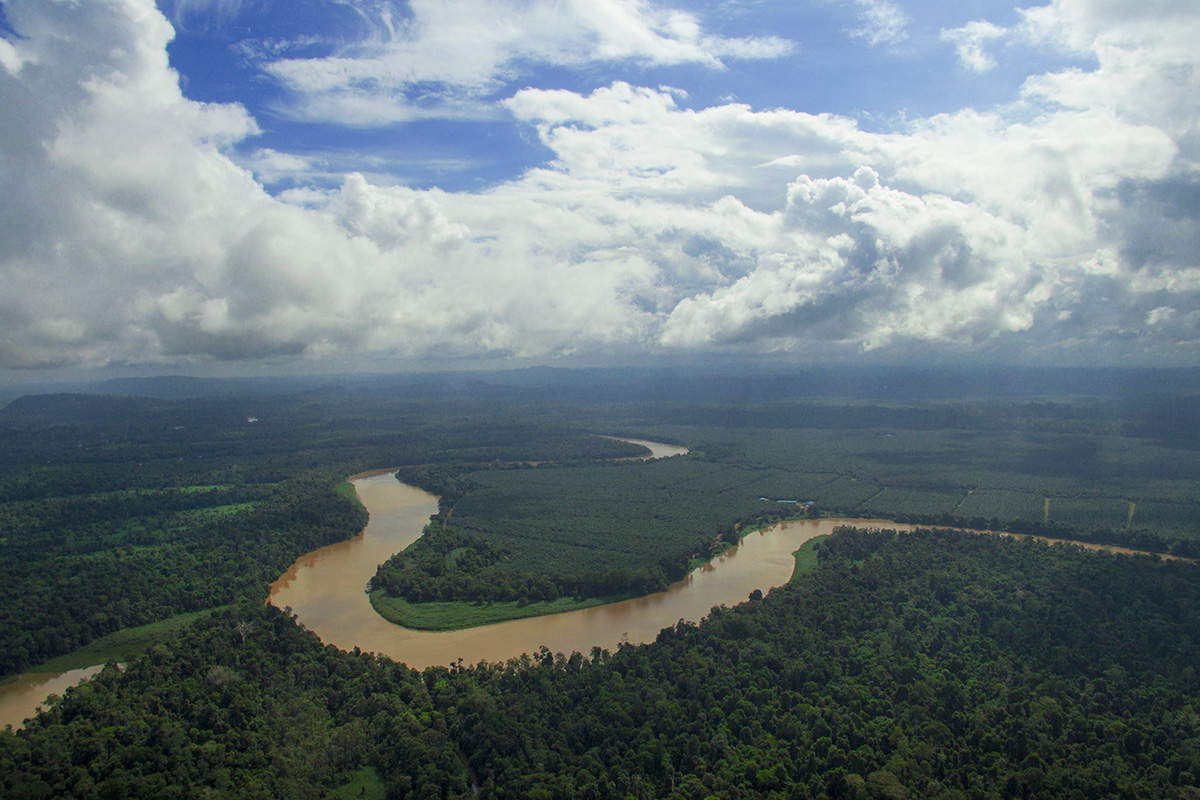
Heavy rainfall upriver can cause the Kinabatangan to rise and flow faster. This occasionally affects which tributaries and ox-bow lakes we can access, limiting some of the quieter, more intimate wildlife spots. Our guides manage this expertly as they’ve been reading this river their entire lives, but it’s worth knowing.
Some Trails Become Slippery
Forest walks are a different experience in wet conditions. Roots become slick. Certain paths become temporarily impassable. You’ll want good footwear, and you may find some walks shorter or re-routed compared to dry season. The forest itself is no less beautiful, arguably more so, but physical comfort requires more preparation.
The Humidity is Real
Borneo is always humid. In the wet season, that humidity intensifies. If you’re not used to tropical climates, the first day or two can feel overwhelming. Your clothes dry slowly. The air feels thick. Most guests acclimatise quickly, but it’s worth knowing before you pack. This means quick-drying and breatheable clothes should definitely be on your packing list.
The Genuine Pros (And Some Will Surprise You)
The Forest is Breathtaking
There is a version of the Borneo rainforest that dry season visitors never quite see. After rain, every surface glistens. Colours deepen, and the greens become almost impossibly vivid. The air smells of earth and growth and something ancient.
James, who visited with his wife some time last year, wrote to us afterwards: “We’d seen photos of Borneo before. But nothing prepared us for the forest after the rain. It felt prehistoric. Like we’d stepped into a world that existed before humans. There was something about the calmness that just took our breath away.”
The River Comes Alive
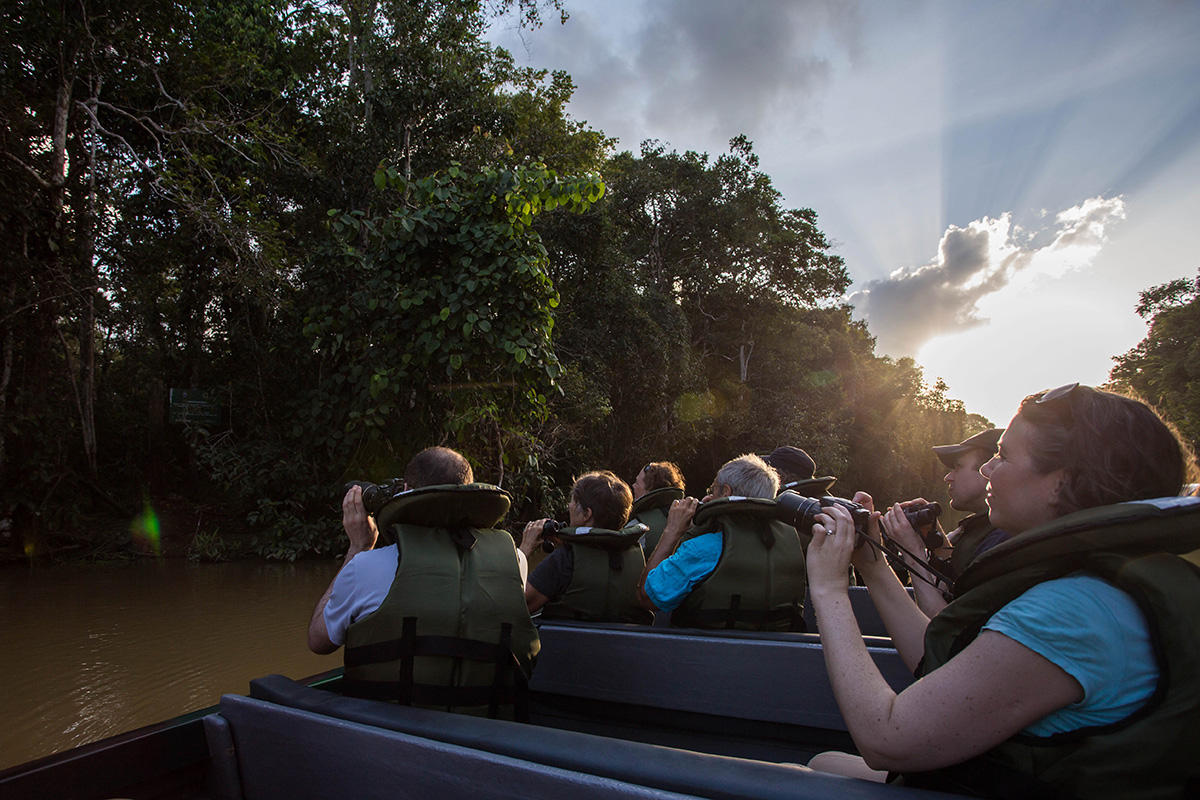
Higher water levels actually expand the forest accessible by boat. Animals that shelter deeper in the canopy during dry months are pushed closer to the water’s edge. We’ve had some of our most memorable elephant encounters in wet season, when herds come to drink at riverbanks made newly accessible by the rise.
Birdwatchers also note that wet season or monsoon season (October-March), brings migratory species that simply aren’t present at other times of year. Though it is not the most ideal time, birding during this time can be more rewarding, not less as they will be fewer crowds, lusher landscapes, and may get more birds on your checklist, including migratory species.
One of our guides who is currently on a birding tour during this wet season (March) has this to say about his group’s experience:
“I am birding right now in the wet season. Today is my 4th day. All morning have been excellent. We got about 80-90% of the birds in Kinabalu Park. Only one afternoon is raining but only for a while. I got 5 additional migrant birds, which you can’t see during dry season. This is speaking from my experience.”

A More Exclusive Experience
With fewer guests at the lodges, wet season travellers enjoy something that money can’t always buy: space. The sundeck is yours. The dining area feels like a private retreat. You’re not sharing your guide’s attention with a full group. You have it almost entirely to yourself. Staff have more time, conversations go deeper, and the whole experience takes on an unhurried, intimate quality that peak season simply cannot offer. Some guests describe it as feeling less like a tour and more like being a personal guest of the rainforest.
The Rain Itself Becomes Part of the Story
This sounds like marketing. It isn’t. Ask any wet season guest and they’ll tell you about the afternoon storm that rolled in while they were on the river. The sky turning a bruised purple, the first fat drops hitting the water, the way the birds went suddenly silent before the downpour.
“It was the most alive I’ve felt in years,” one guest told us. “Not in spite of the rain. Because of it.”
Sometimes, this can happen. Rain out of nowhere, but being in the ‘rainforest’, it’s really part of the adventure.
Who Is Wet Season Right For?
Wet season is a brilliant choice if you:
- Can only travel between November and February and refuse to let that stop you
- Are more interested in the forest and its atmosphere than maximising animal sightings
- Are a serious birdwatcher who would like a chance at seeing migratory bird species
- Value solitude and intimate experiences over peak-season energy
- Don’t mind or actively enjoy dramatic tropical weather
It may not be the right time if you:
- Have your heart set on a specific sighting (wild orang utans, in particular) and will be deeply disappointed if it doesn’t happen
- Have limited mobility and find slippery trails a safety concern
- Are travelling with young children who struggle in intense heat and humidity
How to Make the Most of a Wet Season Visit
Lean into the mornings
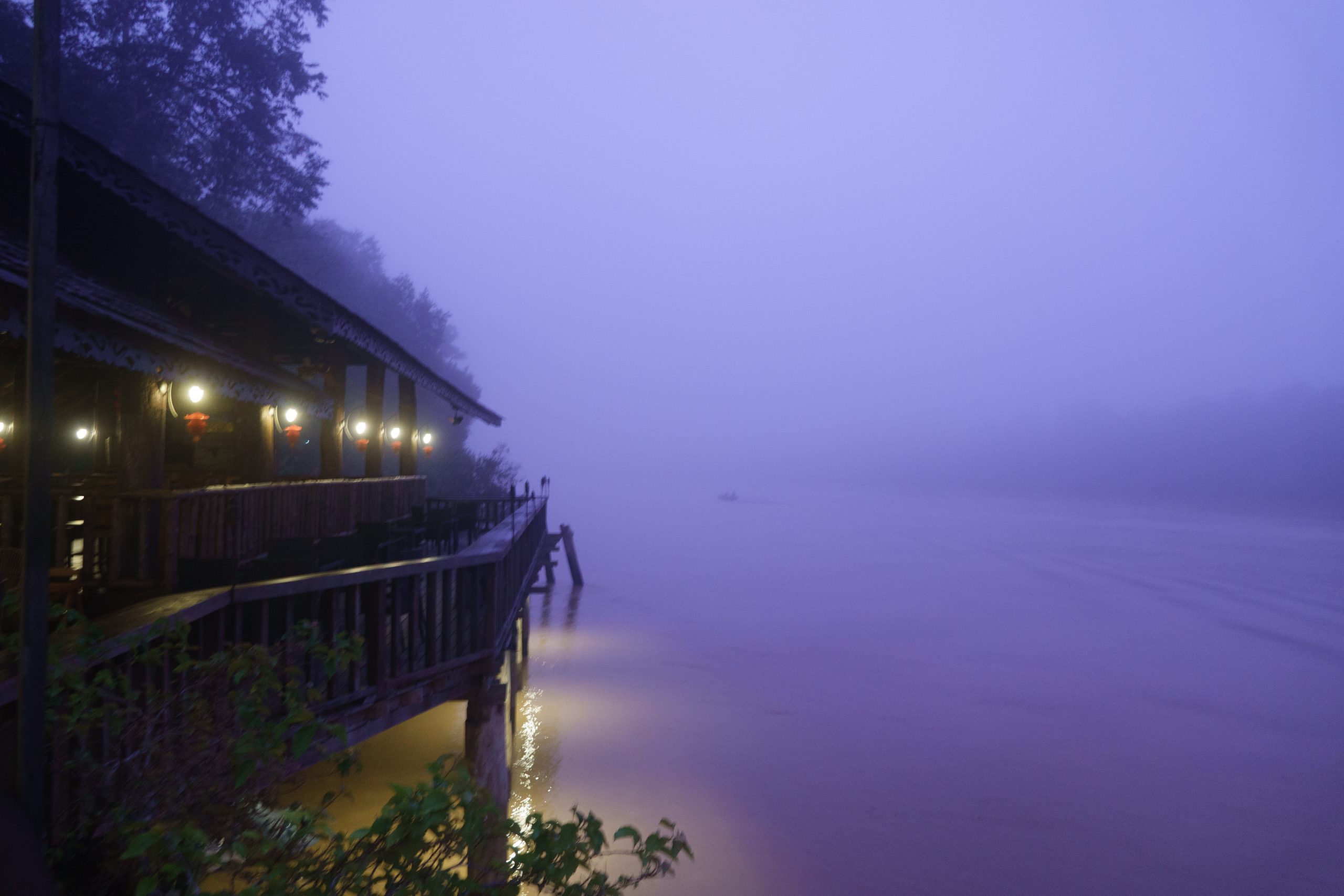
In wet season, mornings are your gold. Early river cruises — before 6am often happen under clear skies, with mist still rising off the water. Wildlife is active. Light is extraordinary. The afternoon storms, when they come, typically arrive later in the day. Early risers are rewarded.
Pack smart
The essentials for wet season Borneo:
• Quick-dry clothing in neutral colours (avoid white — the forest floor will find it)
• A lightweight rain poncho or jacket (an umbrella is awkward on boats and in forest)
• Waterproof bags or dry bags for cameras and electronics
• Sturdy closed-toe shoes with grip for forest walks
• Extra memory cards — wet season light produces extraordinary photography
Trust the rhythm of the forest
The forest has its own schedule. A sudden downpour that forces you under cover for an hour might be followed by the most vivid sunset you’ve ever seen. A morning with no orang utan sighting might end with a herd of pygmy elephants at the riverbank at dusk. Wet season teaches you to release your itinerary and receive whatever the forest offers. Guests who manage that shift almost always describe it as the best part of their trip.
What Sarah Told Us Afterwards
Remember Sarah? The one who was worried her November trip would be ruined?
She emailed us after returning home from her Borneo trip.
“I want you to know something,” she wrote. “The rain was one of my favourite parts. Sitting on the deck at Sukau during an afternoon storm, watching the river rise and the kingfishers dart through the downpour. I didn’t want it to stop.”
“Did we see orang utans? Yes, once — briefly, a mother in the high canopy. Was it the wildlife bonanza I might have got in August? Probably not. But did I fall completely in love with Borneo? Completely. Utterly. I’m already looking at dates for next year.”
That, more than anything, is what wet season Borneo is really like.
Still Deciding?
We’d rather you came in the wet season than didn’t come at all. The Kinabatangan River, the rainforest, the wildlife, the guides who have spent their lives learning this ecosystem, none of that disappears when it rains. If anything, it becomes more elemental. More itself.
Borneo in the rain is still Borneo. And Borneo, in any season, will change you.
Ready to plan your trip? Talk to our team about which dates work best for what you want to experience, or view our popular tours!