



Every guidebook will tell you to bring insect repellent.
They’ll tell you about the heat, the humidity, the need for a visa. They’ll recommend packing light and staying hydrated and being respectful of local customs. All of it is true. None of it is what we mean when guests come back and say, quietly, almost to themselves, “Nobody told me it would be like that.”
After decades of bringing travellers to the rainforests of Sabah, we’ve collected a different kind of knowledge. Not the logistics. The truths that don’t fit neatly into bullet points. The things that catch people off guard. Not unpleasantly, but profoundly.
This is that list.
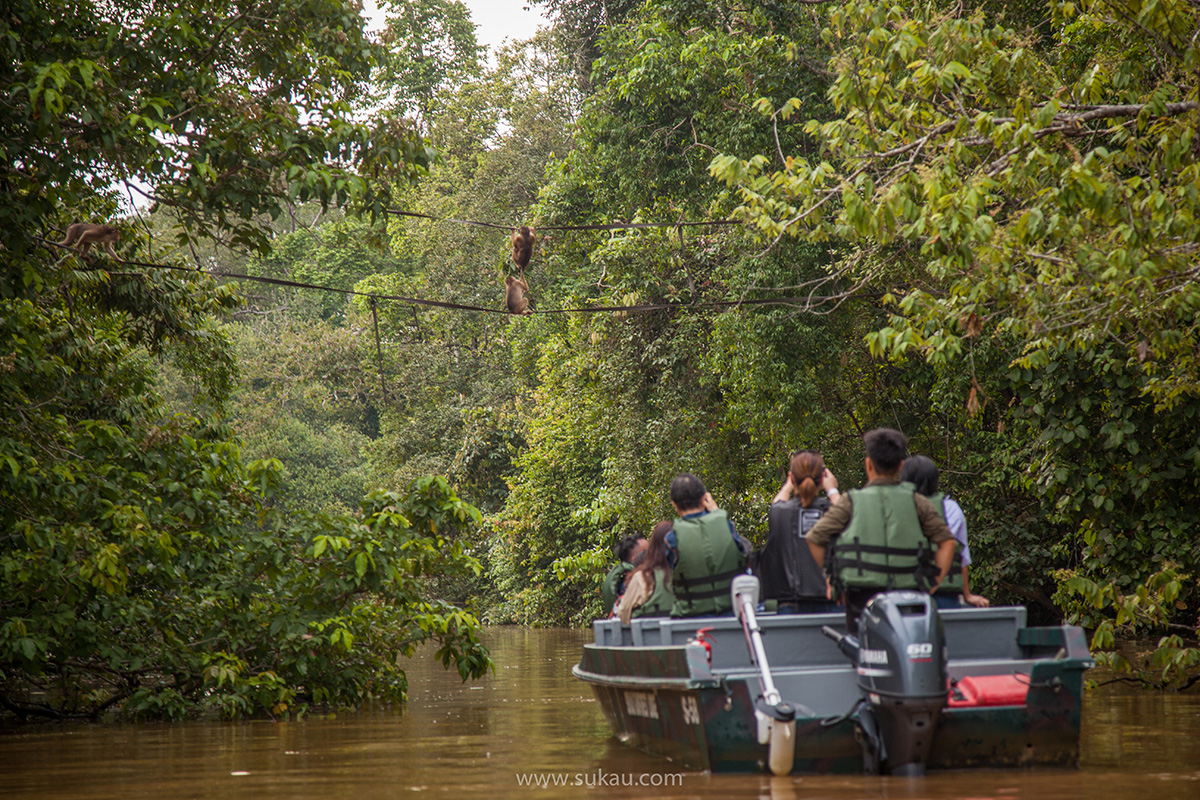
Observing macaques during a river cruise in Kinabatangan
What Does the Borneo Rainforest Actually Sound Like?
First-time visitors often arrive expecting peace and quiet. A serene forest escape. What they find instead is one of the loudest environments on Earth.
The Bornean rainforest is in constant, layered conversation. Cicadas build to a pitch that seems physically impossible. Gibbons call across the canopy at dawn in long, haunting arcs of sound. At night, the forest floor comes alive with frogs, insects, and the distant rustle of things moving through undergrowth. Your first night, you may not sleep much. Not from discomfort, but from sheer, disbelieving wonder at what you’re hearing.
By your second night, most guests tell us it’s the best sleep they’ve had in years.
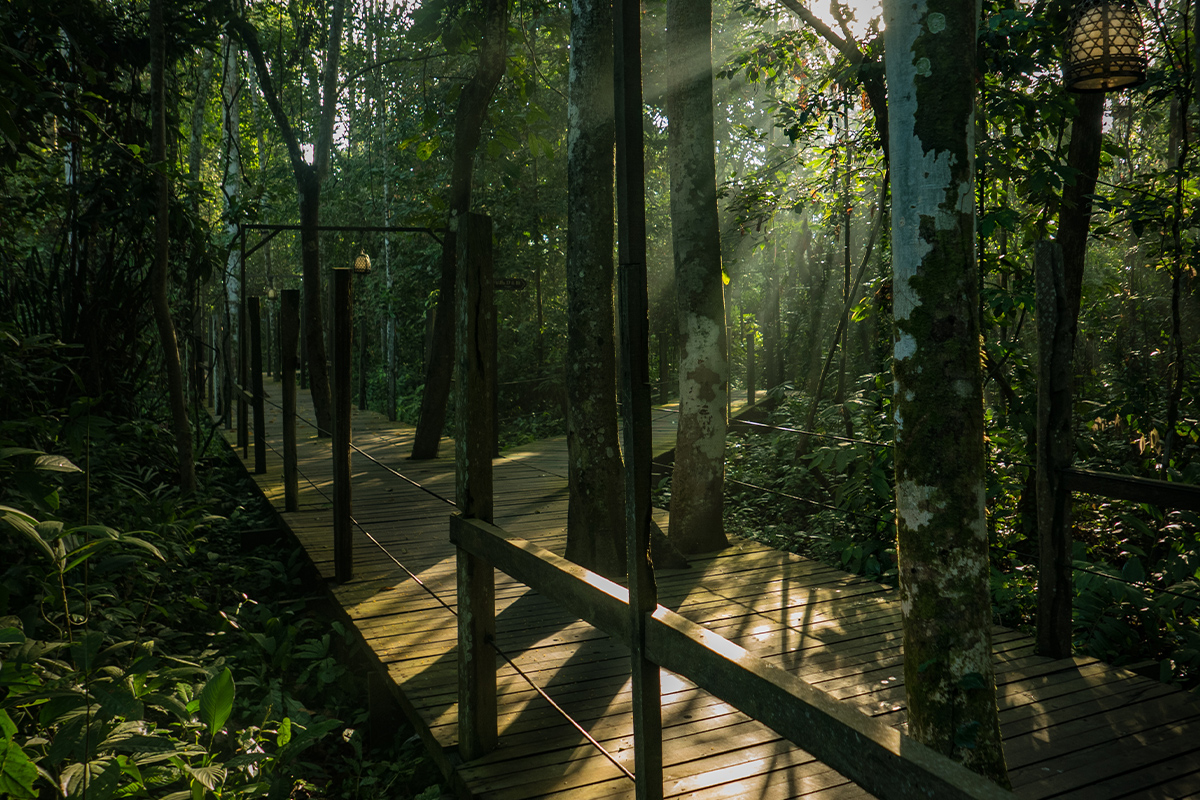
Attenborough Boardwalk at Sukau Rainforest Lodge
What It Really Feels Like to See Wildlife in Borneo
You’ve seen documentaries. You’ve watched the footage. You think you know what it will feel like to see a wild orang utan.
You don’t. Not even close.
What the screen cannot convey is the physical reality of it, like the size of the animal, the intelligence in the eyes, the uncanny familiarity of watching something so close to human move through the trees with such fluid ease. Guests frequently describe a feeling they struggle to name. Something between recognition and vertigo. The sense of encountering a relative you didn’t know you had.
“I’ve seen lions in Kenya and whales off Iceland,” one guest told us after her first orang utan sighting. “This was something else. I can’t explain why. It just went somewhere deeper.”
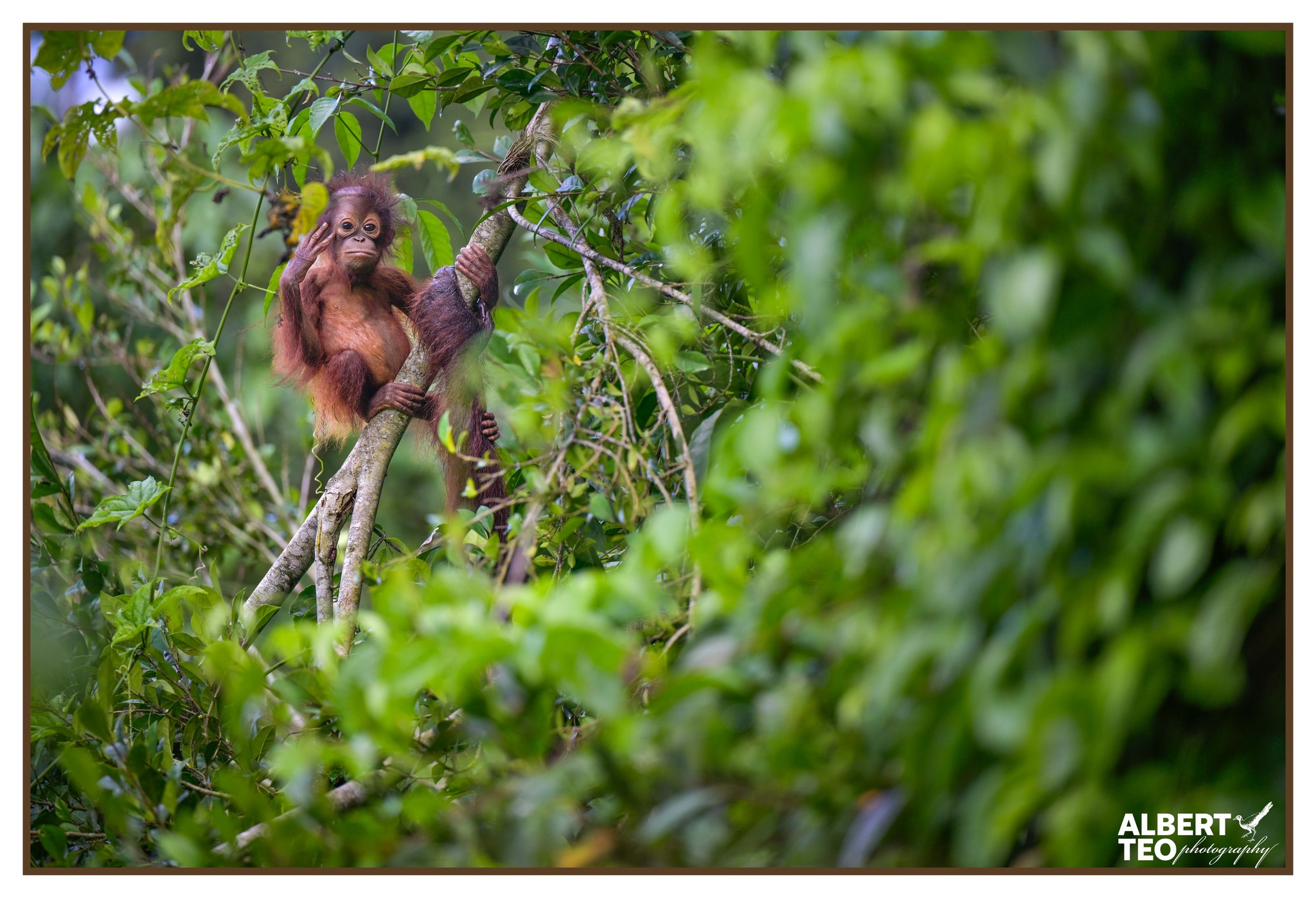
A wild baby orang utan
Why Your Wildlife Guide Makes or Breaks a Borneo Trip
Guidebooks talk about guides as logistics, like the person who drives the boat, who knows where the animals are. What they don’t adequately convey is this: a great Borneo guide is one of the most knowledgeable, perceptive, and quietly extraordinary people you will ever meet.
Many of our guides have spent thirty, forty years reading the Kinabatangan River. They know its moods by the colour of the water. They can hear a hornbill before you could ever see one. They know which fig trees are fruiting this week and therefore where the orang utans are likely to be. They know the difference between a ripple caused by a false gharial and one caused by a river otter, from twenty metres away, in fading light.
But more than that, they know why it matters. A few even grew up here, and for most, it is their second home. This forest is their home, their livelihood, their identity. The conversations you have with them, especially in the quieter moments, have a way of reshaping how you see the world.
Ask them questions. Ask them everything. These conversations are not a side note to the trip. For many guests, they are the trip.
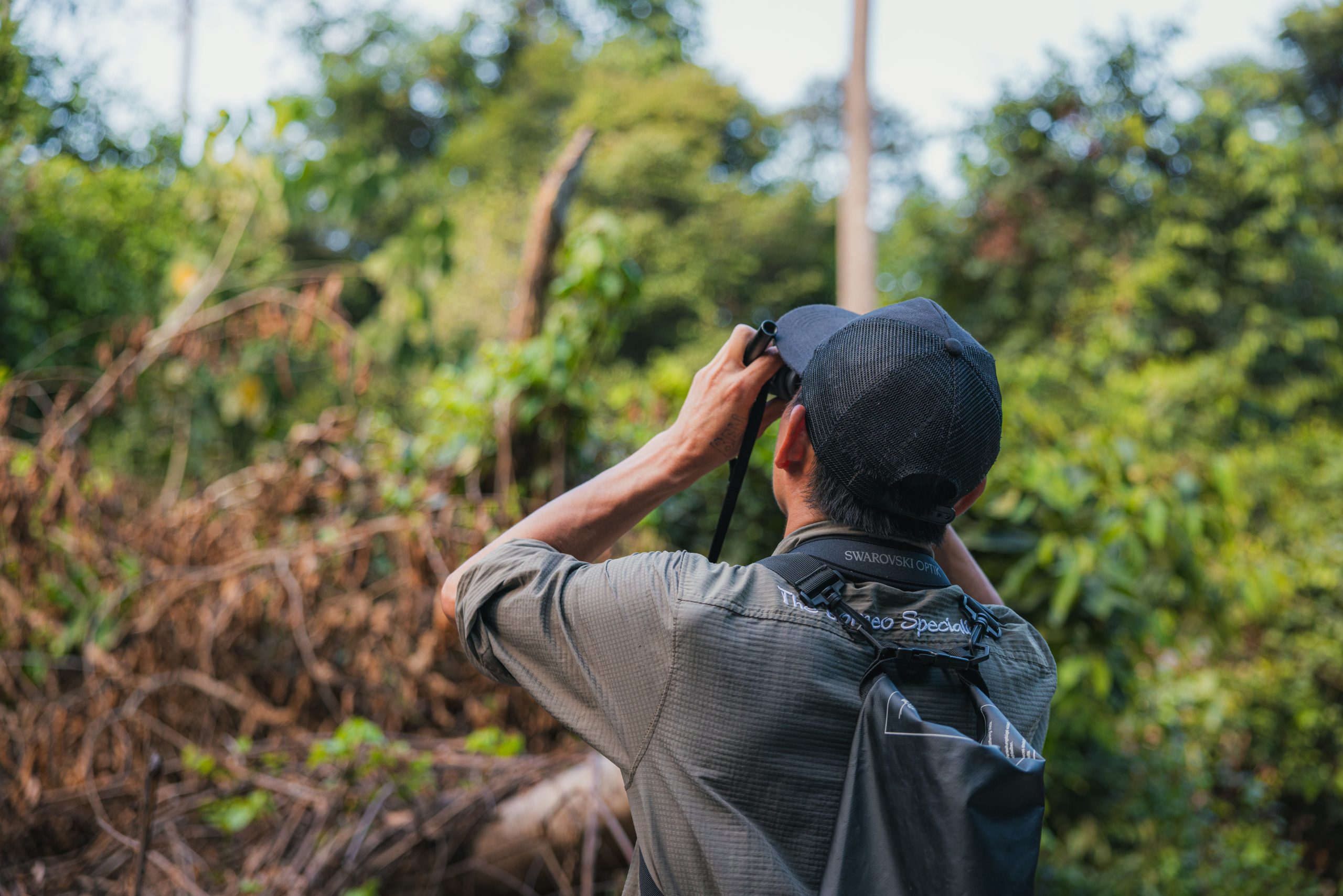
Our guide spotting something in the distance
How Visiting Borneo Changes the Way You See the World
Borneo has a way of ambushing people emotionally. You come for the wildlife and the adventure, and you get those. But alongside them, unbidden, comes something harder to put into words.
Grief, sometimes. Learning that the primary forest you’re standing in represents a fraction of what existed fifty years ago, that the orang utans you’re watching could be functionally extinct in the wild within decades, lands differently when you’re actually here. It’s not abstract. It has a face. Several of them, looking at you from the canopy.
But also something close to hope. Because the forest is still here. The animals are still here. The people working to protect them are extraordinary and tireless. And you are here, which means the economics of conservation are still holding.
Many guests come back changed. Not dramatically, not overnight, but in the quiet way that meaningful experiences work. They make different choices. They talk to their children differently about the natural world. Some even book again.
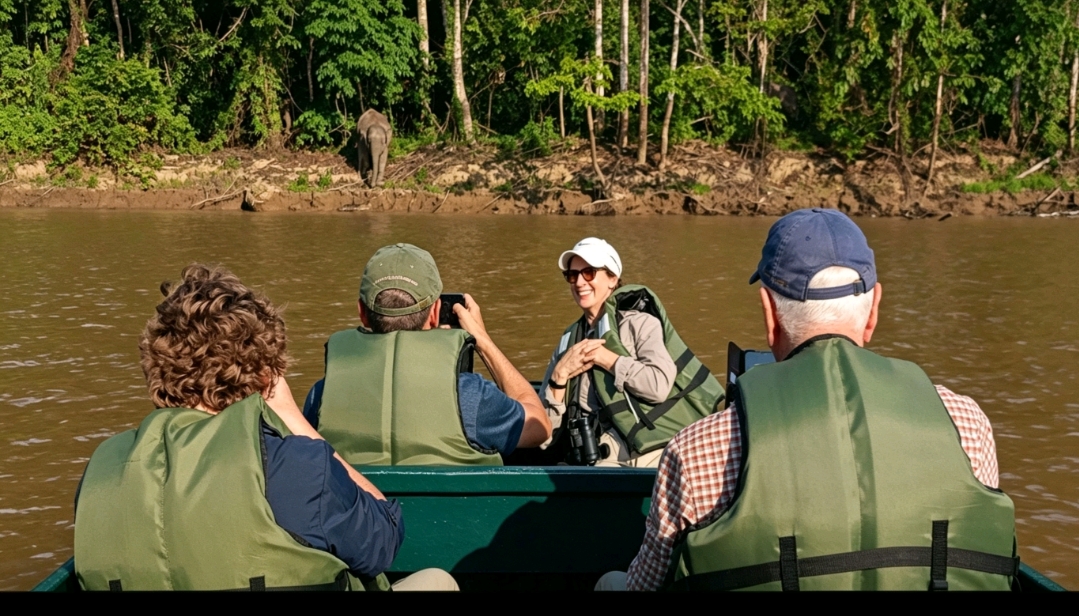
Guests sighting a Bornean pygmy elephant by the riverbank in Kinabatangan
Why Patience Is the Most Important Thing to Pack for Borneo
Modern travel has trained us to optimise. To fill every hour. To feel faintly anxious when nothing is happening.
Borneo requires you to unlearn this, at least partially. Wildlife does not perform on a schedule. Some of the best sightings happen when the boat has been drifting quietly for forty minutes and everyone has stopped expecting anything. Your guide cuts the engine. Everyone goes still. And then.. movement in the trees.
The waiting teaches you something. Attention, maybe. Or patience that isn’t really patience but more like a particular quality of presence that most of us rarely access. Guests who resist it sometimes have frustrating days. Those who surrender to it almost always describe those same quiet, unhurried stretches as among the most peaceful of their lives.
Leave your agenda on the riverbank. The forest will provide its own.
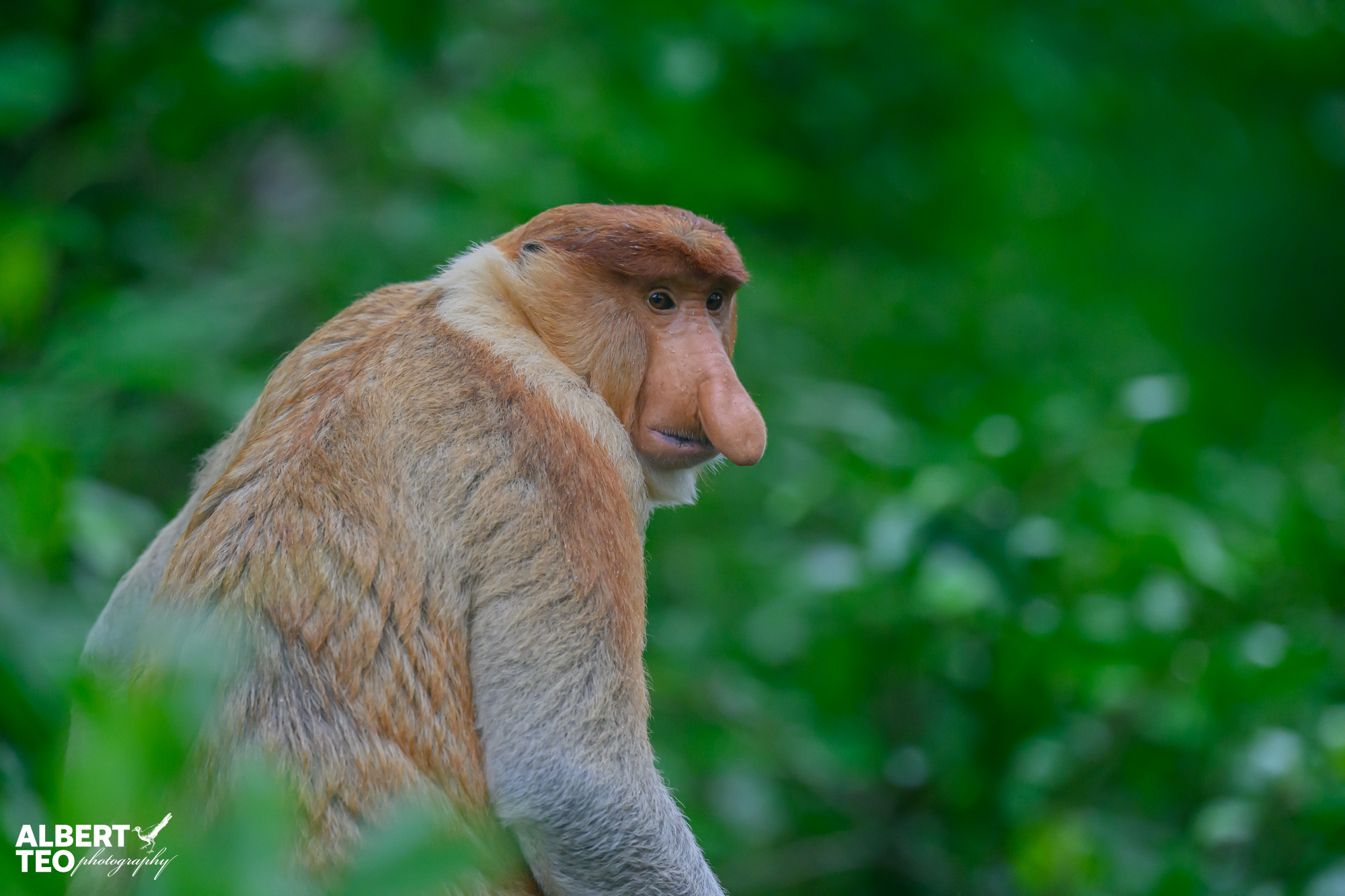
A male proboscis monkey
The Unexpected Moments Borneo Travellers Remember Forever
Everyone hopes to see an orang utan. Most people do, and it is every bit as extraordinary as they imagined. But ask returning guests years later, what they remember most, and the answers are often unexpected.
• The way the mist sat on the river at 5:30 in the morning, before anyone else was awake.
• A kingfisher, electric blue that landed on the bow of the boat for thirty seconds and then was gone.
• The smell of the forest after rain. Something between earth and green and time.
• A proboscis monkey, absurd and magnificent, watching them from a branch with an expression of complete disdain.
Borneo is generous with these moments. They don’t announce themselves. You can’t plan for them or pay extra for them. They simply happen, and then they belong to you forever.
Why So Many Borneo Visitors Come Back a Second Time
This one sounds like marketing. It isn’t.
Almost every guest, on their last morning, experiences something between reluctance and mild grief. The trip they spent months anticipating is ending, and the world they’re returning to suddenly feels very loud, very fast, and very far from the Kinabatangan at dusk.
“I cried on the boat back to the jetty,” wrote Helen, who visited last year. “Not from sadness exactly. More like gratitude. And the feeling that I’d been given something I hadn’t known I needed.”
The good news is that Borneo will wait for you. The river will still be there. The forest, if we do our collective job well, will still be there. And the guides, some older, perhaps wiser, their knowledge deeper, will be there too.
Most guests come back. Not because they didn’t see enough the first time. Because they did.
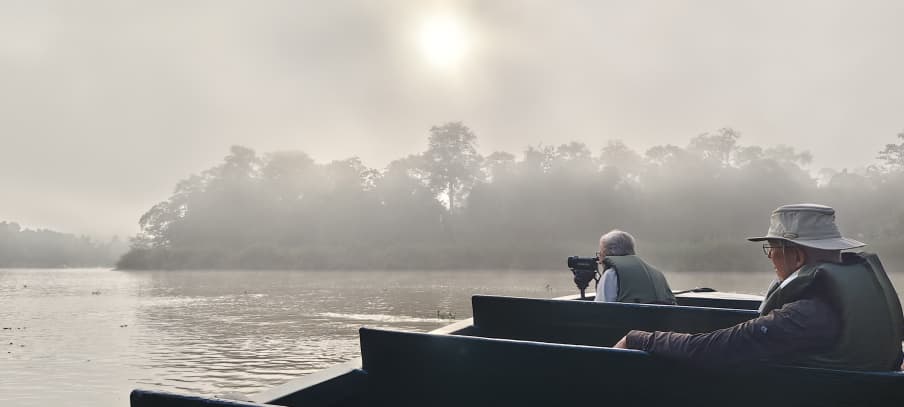
Malcolm & Margaret during their 8th visit to Borneo and stay at Sukau Rainforest Lodge
Why Visiting Borneo Actually Matters for Conservation
Your presence here matters.
Responsible ecotourism is one of the most direct and effective tools for rainforest conservation that currently exists. When you choose to visit, to spend time and money in this ecosystem rather than just reading about it from a distance — you are making a tangible argument for the forest’s value. You are part of the reason it is still here.
The guidebooks won’t tell you that. But we will.
Plan Your Borneo Wildlife Trip With Borneo Eco Tours
No blog post, documentary, or guidebook fully prepares you for Borneo. The only way to understand it is to go. Our team has been designing wildlife experiences in Sabah for decades, and we’d love to help you plan yours.
Get in touch with our team to start planning something for your upcoming Borneo adventure.