



It started with a hornbill.
The Thompson family had been on the river for less than twenty minutes. Mum and Dad were scanning the treeline while enjoying the balmy Bornean breeze, while their seven-year-old, Ella, fiddled with the strap of her lifejacket. Their thirteen-year-old, Marcus, was, let’s be honest — on his phone.
Then the guide whispered: “Rhinoceros hornbill. Eleven o’clock.”
Ella sat up straight, eyes wide at the direction the guide pointed at. Marcus put the phone face-down on his seat and didn’t touch it for the rest of the day.
That moment and a hundred others like it across four days, is what Borneo does to families. It bypasses the arguments about screen time and bedtime and “are we there yet” and replaces them with something else entirely: genuine, undivided, wide-eyed wonder. Shared across every age.
But we’d be doing you a disservice if we pretended it was all effortless. Travelling to Borneo with children takes preparation, realistic expectations, and a willingness to let the forest set the agenda. Here’s our honest guide to making it work, at every age.
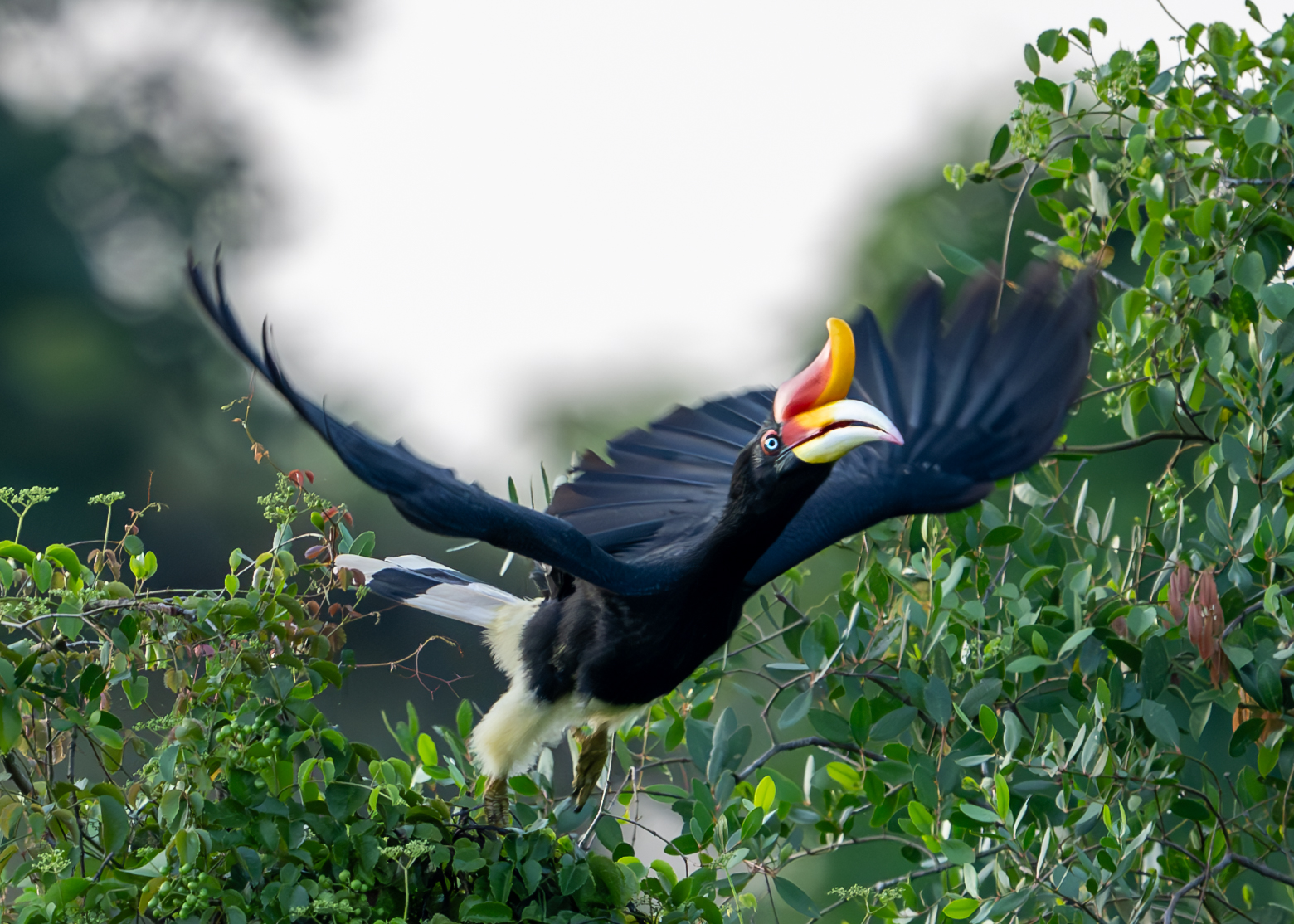
Rhinoceros hornbill taking flight
Is Borneo Actually Suitable for Kids?
The short answer: Yes, more than most parents expect.
The longer answer: It depends on your children, your trip design, and your willingness to flex. Borneo is not a theme park. There are no guaranteed sightings, no air-conditioned coaches between attractions, no kids’ menus at every meal (but this shouldn’t be a problem with prior arrangements with your tour operator). What there is, however, is something far more valuable. A living, breathing ecosystem that captures the imagination of children in ways that no screen, no zoo, and no classroom ever quite manage.
Wildlife is the great equaliser. A five-year-old and a fifteen-year-old will both freeze in identical awe when a wild orangutan looks directly at them from fifteen metres up. That shared experience is unscripted, unrepeatable, and is the beating heart of a Borneo family trip.
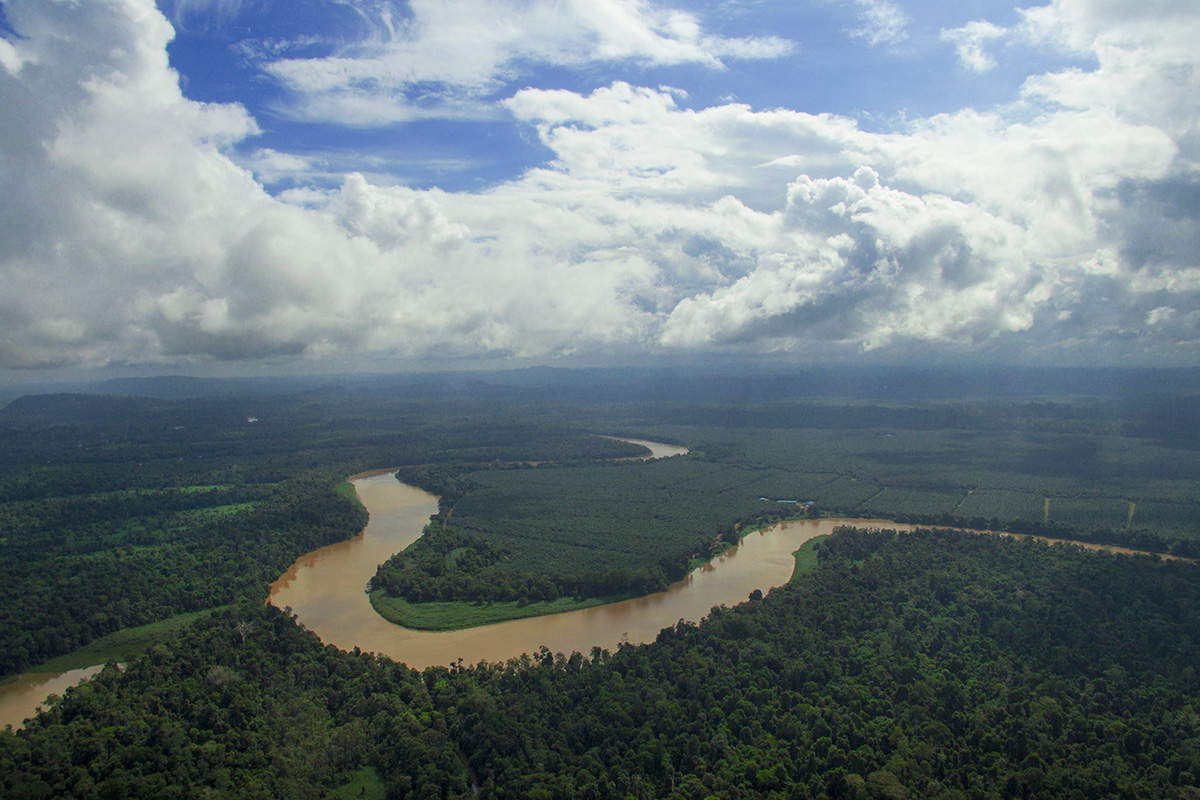
The snaking Kinabatangan River
What Works by Age Group
Young Children (Ages 5–8): The Age of Pure Wonder
Young children are, in many ways, the ideal Borneo travellers. They have no preconceptions. They haven’t yet learned to be unimpressed. A macaque is not just a macaque. It’s the most extraordinary thing they’ve ever seen, and they will tell everyone about it for months.
What works especially well:
• River cruises: The boat keeps them contained and the sightings come to them. No long hikes required.
• Sepilok Orang Utan Rehabilitation Centre: Close-up encounters at feeding platforms are perfectly suited to shorter attention spans.
• Lodge life: Swimming pools, open-air decks, and the endless entertainment of exploring the boardwalks for interesting sights and scenes.
• Night walks: Torchlight, glowing eyes in the dark, and the theatrical drama of the nocturnal forest. Young children often find this more thrilling than any daytime activity.
What to watch:
• Heat and humidity hit small bodies hard. Build in rest time during the hottest part of the afternoon.
• Insects are a reality. Long sleeves, good repellent, and managed expectations go a long way.
• Patience, theirs and yours. Wildlife doesn’t perform on demand. Have small distractions ready for the quieter stretches.
Tweens (Ages 9–12): The Age of Genuine Engagement
This is arguably the golden age for a Borneo trip. Tweens are old enough to understand what they’re seeing. The conservation stakes, the biology, the behaviour, and young enough to be completely, unselfconsciously captivated by it.
Give a ten-year-old a field guide and a pair of binoculars and watch them become an expert by day two. Our guides love this age group. They ask brilliant questions, they remember everything they’re told, and their enthusiasm is infectious.
What works especially well:
• Guided forest walks: Long enough for real discovery, with a guide who can explain what they’re seeing.
• Photography: At this age, many children become serious about capturing what they see. A basic camera or a phone with a decent lens gives them a mission.
• Asking questions: Encourage them to interview the guide. The conversations that result are often the highlights parents remember most.
• The conservation story: Tweens grasp the urgency of orang utan habitat loss and often become passionate advocates after the trip.
Teenagers (Ages 13–17): The Age of Unexpected Conversion
Teenagers are the wildcard. They may arrive reluctant, dragged along on a “nature trip” when they’d rather be anywhere else. But in our experience, Borneo converts them more reliably than almost anywhere on Earth.
The key is respecting their intelligence. Teenagers don’t want to be talked down to or herded. They want to engage on their own terms, and the forest, with its complexity and its stakes, meets them there.
Remember Marcus and his phone? By day three, he was up before his parents for the 6:00am river cruise. He photographed numerous bird species. He asked the guide whether he could come back to volunteer during school holidays. His mother told us: “I’ve never seen him like that. So present. So genuinely interested.”
Recommended Tour: 5D4N Borneo Wildlife Safari
What works especially well:
• Giving them a role: Let them be the designated photographer, the species tracker, the one who reads the field guide aloud.
• The conservation conversation: Teenagers respond powerfully to the idea that orang utans could be functionally extinct in the wild within their lifetime. It makes the trip feel important, not just interesting.
• More physical activities: Longer forest treks and night walks. The physical challenge adds another dimension.
• Genuine connection with guides: Our guides speak candidly with teenagers about their lives, the forest, what’s changing. These conversations often have a profound effect.
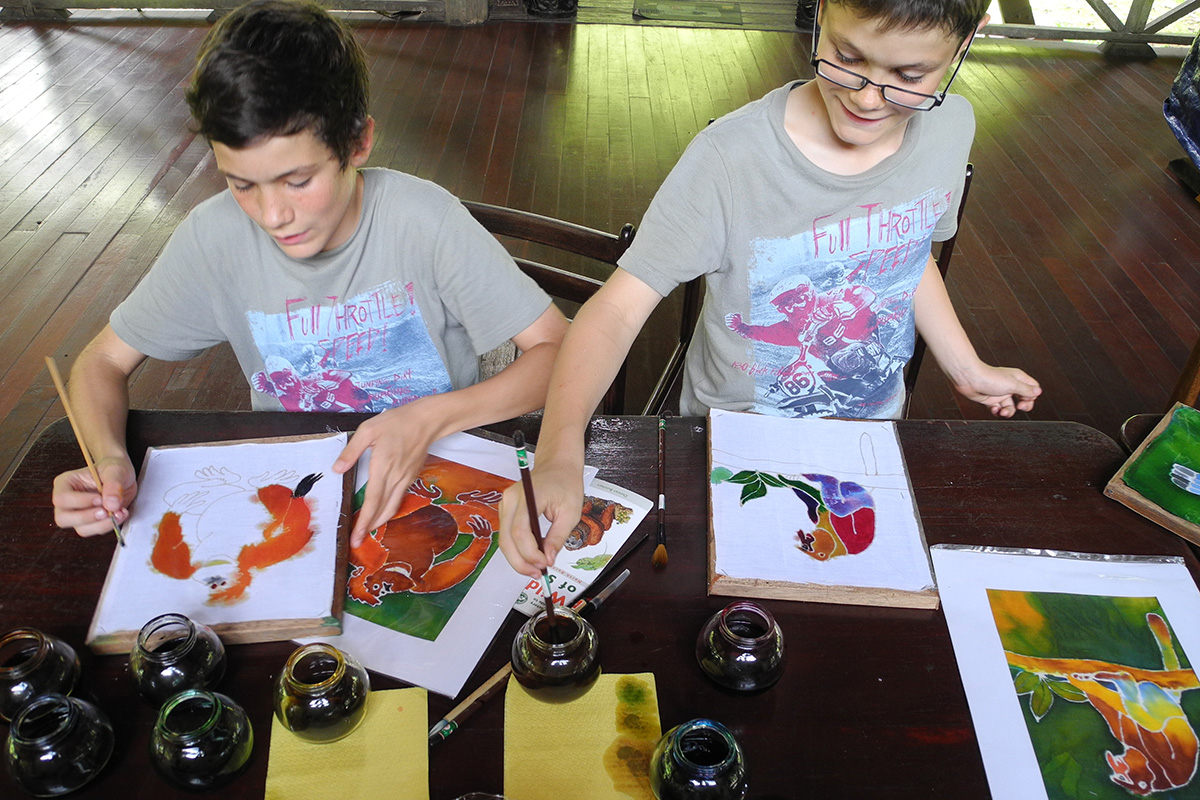
Batik painting activity for the kids
What Doesn’t Work (Honest Answers)
Trying to do too much
The temptation with a family trip is to pack it full — Sepilok, Kinabatangan, Danum Valley, Sungai Kapur Virgin Jungle Reserve, Kota Kinabalu, all in ten days. Resist this. Borneo rewards stillness. Some of the best family moments happen when you’re sitting quietly on a lodge deck at dusk, not rushing to the next attraction. Build in breathing room. Children, especially younger ones need it.
Guaranteeing specific sightings
“You’ll definitely see wild orang utans” is a promise no honest guide will make. Wild animals are wild. If your child has their heart absolutely set on a specific encounter, make sure they also understand that the search is part of the experience, and that whatever the forest offers will be extraordinary in its own right. Children who go in with open minds consistently have better trips than those with a fixed checklist. This applies the same to most adult travellers.

Orang utan spotted in the wild
Underestimating the logistics
Getting to Kinabatangan involves a flight to Kota Kinabalu, a connection to Sandakan, and then the option of a 2-hour drive or a 2.5-hour speedboat journey to your accommodation by the river. With young children, this travel day needs planning. You’re going to need snacks, entertainment, managed expectations. It’s not difficult, but it’s not a short hop either. Factor it into your overall trip design.
Expecting resort-style comfort everywhere
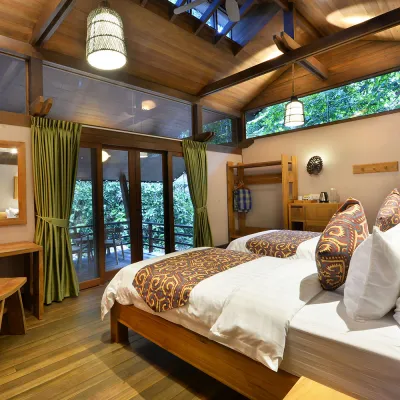
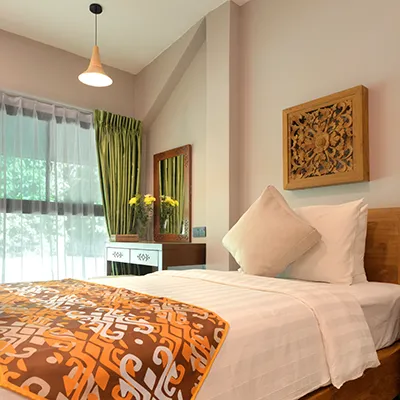
Our rainforest lodges are comfortable, well-run, and genuinely lovely. But they are lodges, not five-star hotels. Rooms may have the sounds of the forest at night (and the occasional gecko on the wall). This is, for most children, absolutely thrilling. For adults expecting marble bathrooms, it’s worth recalibrating expectations before you arrive.
What They’ll Never Forget
We’ve been asking families this question for years. The answers are rarely what you’d expect.
Not the most dramatic sighting (though those matter). Not the lodge with the best pool. What children remember, years later, are the small and specific moments. The ones that belong entirely to them.
“The sound of the forest at night when I couldn’t sleep. It was so loud and so alive.” — Priya, age 9
“When the orangutan looked straight at me and I looked back at her and it felt like she knew me.” — Daniel, age 11
“Our guide knew the name of every single bird. Every single one. I want to know things like that about something.” — Sophie, age 14
“The moment my dad grabbed my arm and pointed and we both just stood there saying nothing because there was a pygmy elephant right there.” — Kai, age 8
These aren’t things you can engineer. They’re what happens when you bring children into a living ecosystem and let it work on them. Borneo has been doing this for a very long time. It knows what it’s doing.
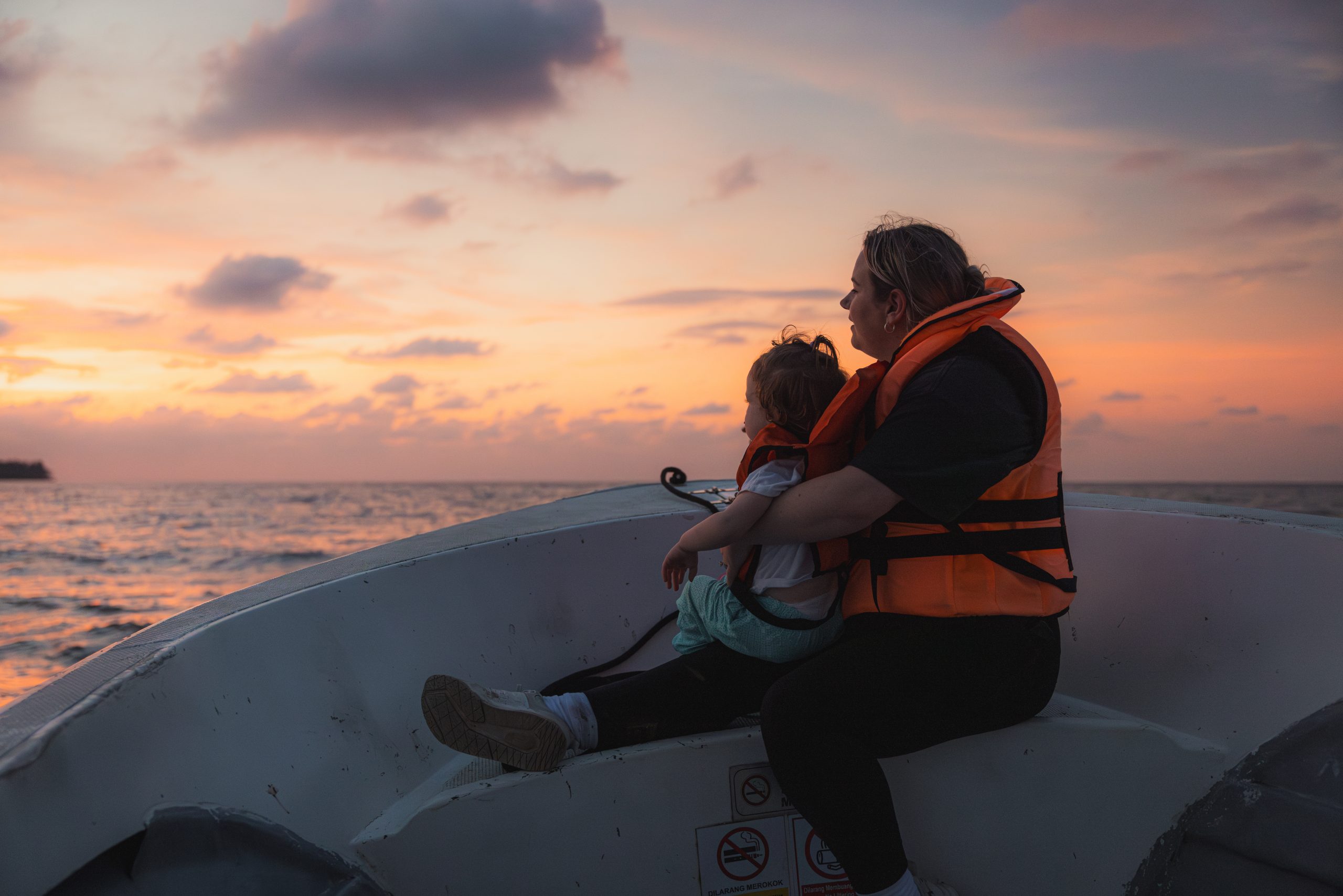
Photo credit: On The Fly
A Few Tips to Make the Most of It
• Let the children lead sometimes. If your eight-year-old is obsessed with a particular beetle on a leaf, stop. Let the guide explain it. That beetle might be the thing they talk about forever.
• Get them a journal. Children who record what they see, whether it’s by drawings, lists or descriptions, engage more deeply and remember more. Some of our young guests have brought their Borneo journals to show us on return trips years later.
• Talk to your tour consultant about your family before the trip. Good guides adjust their approach completely depending on the ages and interests of their group. The more they know, the better they can tailor the experience.
• Give teenagers genuine responsibility. Navigation, photography, keeping the species list. Responsibility breeds investment.
• Embrace the unexpected. The planned activities are wonderful. But the unplanned moments, like the Bornean pygmy elephant that appears around a river bend, the storm that pins you all together in the boat, the fireflies that turn the riverbank to magic at dusk, these are the ones that last.
The Thing Parents Tell Us Most Often
Long after the trip, after the photos have been shared and the souvenirs have found their shelves, parents write to us about something they didn’t expect.
Not the wildlife. Not even the memories.
They write about their children.
“Something shifted in my son in Borneo,” one father wrote to us. “He came back quieter. More thoughtful. He’d joined the school’s environmental club by the end of the month. He talks about going back like it’s a given. Like it’s already decided.”
This is what Borneo does to children who are ready for it. It gives them something to care about. A place that matters. A story that’s theirs.
In a world of endless content and manufactured experience, that is no small thing.
Ready to Plan Your Family Adventure?
Every family is different. The best Borneo trip for yours depends on your children’s ages, interests, and pace. Our team has been designing family itineraries for decades — we know what works, what to avoid, and how to build a trip that every member of your family will talk about for years.
Explore our Family Tour packages or get in touch to start planning something tailor-made for yours.