



If you want to gaze at orang utang swinging through the jungle, go in quest of the elusive pygmy elephant or just marvel at a host of other rare mammals, amphibians and birds, Kinabatangan in Eastern Sabah is your place.
As one of the region’s few remaining freshwater swamp forests, Kinabatangan wildlife sanctuary offers Southeast Asia’s most varied and accessible wildlife experience.
It’s almost as though nature planned it this way with heavy rainfalls from the northeastern monsoon inundating the area and creating such a fertile environment. As a result, it’s home to the highest density of wildlife in the whole of Sabah.
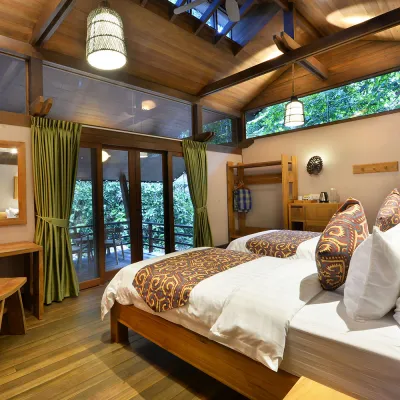
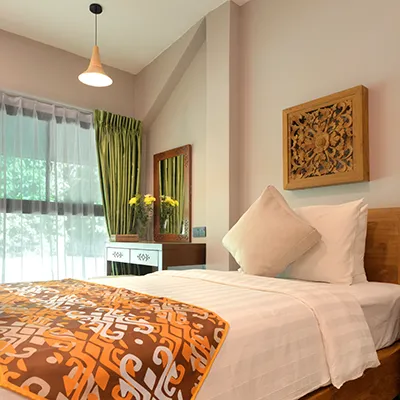
The best way to experience the area’s treasures to stay at one of the resorts, lodges homestays or hostels along the Kinabatangan river, mostly around the villages of Bilit and Sukau. This way, you’re truly immersed in nature. Stay at a lodge and have nature right on your doorstep. Just step out of your room onto one of the nature trails that many lodges maintain. Guides are generally available.
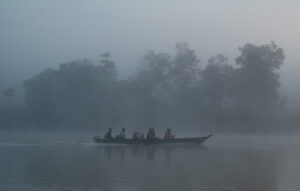
However most visitors find that it’s a river trip that truly unlocks the area’s wildlife experience. Sungai Kinabatangan is Sabah’s longest river flowing 560 kilometers from the Crocker Range before emptying into the Sulu Sea. Along the river are some 30 oxbow lakes, U-shaped bends that form bodies of water, each an ecosystem.
Traveling along this wide, murky, brown waterway plied by crocodiles, passing through swathes of dense rainforest is a primal experience. One treat is to scope out orang utang gamboling among the trees along the riverbank and snacking on the copious damp foliage.
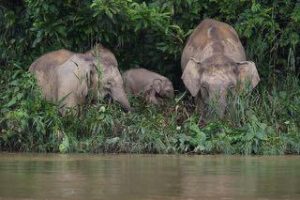
Altogether some 50 species of mammal can this area home including rare endemic creatures such as the pygmy elephant. In fact, a Kinabatangan river cruise offers you the best chance on the whole island of glimpsing the increasingly rare mammal. You can also look out for the Bornean gibbon and more obscure species including flat-headed cat and Bornean ground cuckoo.
Other notable primates that make home in the area include the Proboscis monkey, (Nasalis larvatus), so called for its long nose. They have distended bellies and the male monkeys’ noses swell and turn red if they become angry. Something to look out for.
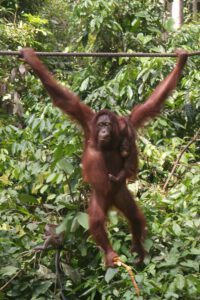
With wildlife in much of the world in decline, it’s good to know that places such as Kinabatangan are thriving.
Here are some tips to help you make the most out of your Kinabatangan experience:
- Kinabatangan can be visited all year round though the rainy season can make travel difficult.
- The best time for seeing wildlife on the Kinabatangan River is early morning and early evening, just before sunset. (Animals often sleep during the day).
- On evening and night river tours the boatmen use lamps to locate the animals. Often all you see are eyes gleaming in the dark.
- Be sure to choose a reputable camp or tour provider. They’re more likely to have knowledgeable guides who can steer you to the hidden creeks and other secret areas where rare species are likely to congregate.
- Remember that this is the animals’ home so treat the area with respect. Do not feed animals and do not litter. In addition, keeping quiet will increase your chances of glimpsing a rare creature.
- Don’t forget to stock up with sunscreen, mosquito repellant and leech socks. Telephoto lenses and extra camera batteries are also helpful.